The Flywheel Fork: Reading a Doubling Clutch Quote Without Panic
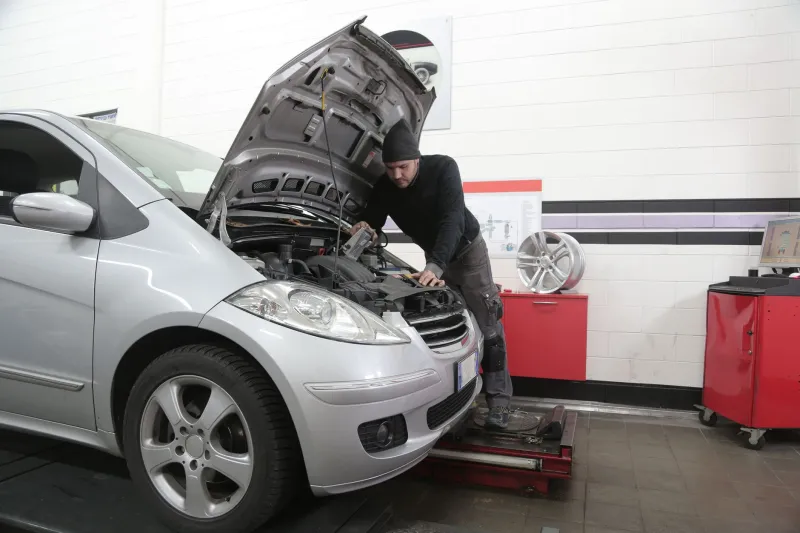
You ask for a clutch quote. The first number sounds sensible. Then the fitter sucks air through their teeth and says the flywheel really ought to be done at the same time. Suddenly the job is heading towards four figures and you are standing there wondering whether you are being looked after or loaded onto a ramp marked 'extra work'.
That moment is common enough to have its own shape. It is the flywheel fork in the road. And the good news is that it is not a choice you have to make on instinct alone. With a few pointed questions and a bit of context, you can tell the difference between a genuine recommendation and a lazy upsell.
Why the flywheel elbows its way into the conversation
On most modern manual cars, the clutch does not simply press against a heavy lump of solid metal. It works with a dual-mass flywheel, or DMF. Think of it as a spring-loaded buffer between the engine and the gearbox. It smooths out the pulses from the engine, takes the sting out of gear changes and helps stop vibration from rattling through the car.
Because the clutch friction disc mates with the flywheel face, the two parts share a working life. When the clutch is worn, the flywheel surface may also be scored, heat-cracked or past its best. And because the gearbox has to come out to reach either part, doing both together saves labour. That is the honest reason a fitter raises it. The less honest reason is that it is an easy way to add several hundred pounds to a quote.
The symptoms that actually point to a tired flywheel
A worn dual-mass flywheel can produce a few fairly recognisable clues. You may feel judder when pulling away, especially from cold. There may be a rattle at idle that quietens when you press the clutch pedal. Under load, perhaps up a hill or with a full car, you might notice a vibration that was not there before. Some cars clunk or shudder when the engine is switched off.
That said, none of those symptoms is a signed confession. Judder can come from a contaminated clutch, a worn engine mount or even a badly bedded-in new clutch. A rattle at idle can be a heat shield or an exhaust bracket. So the question is not 'does it feel rough?' It is 'what has the fitter actually measured?'
Genuine wear or a lazy upsell?
A proper diagnosis should involve more than a road test and a shrug. Ask what they found when the gearbox was off or when they inspected the flywheel. A dual-mass flywheel has a specified amount of rotational play and rocking movement. It can also show heat spots, cracking or a worn friction face. A good mobile fitter will photograph the old part and explain what is out of spec.
If the answer is simply 'they always go at this mileage', press a little harder. Mileage is a clue, not a diagnosis. A well-driven motorway car on 110,000 miles may have a healthier flywheel than a stop-start city car on 60,000. The part number and the measurement matter more than the number on the clock.
What the numbers look like in 2026
Prices vary hugely by car, but for a typical UK family hatch or mid-size estate, a clutch-only job often lands somewhere between £450 and £900. Add a dual-mass flywheel and you are commonly looking at £900 to £1,600, with larger SUVs, vans and premium models pushing beyond that.
That jump is not automatically profiteering. The flywheel itself can cost several hundred pounds, and the labour is already underway. Doing the flywheel later means paying for the gearbox to come out twice. Still, a doubling quote deserves a second look, especially if the car is older or you are not planning to keep it long.
A decision framework you can use
Start with age and mileage, but do not stop there. If the car is under about 80,000 miles, has a smooth clutch and the flywheel is within spec, a clutch-only repair is often reasonable. If it is past 120,000 miles and you plan to keep it, replacing both is usually the calmer long-term bet. The middle ground is where judgement comes in.
Driving style matters too. Lots of town crawling, hill starts, towing or heavy loads put more heat and shock through the flywheel. A car that has spent its life on A-roads may still have plenty of life left in it. A car that has done years of school-run shuffling may not.
Then ask how long you plan to keep the car. If you are selling within the year and the flywheel is serviceable, clutch-only can make sense. If you are keeping it for another five years, the extra spend now may be cheaper than a second strip-down later. Get the fitter to quote both ways, clutch-only and clutch-plus-flywheel, and ask what happens if they find the flywheel is fine once it is apart.
Questions to ask before you say yes
What exactly did you measure, and what is the specification? Can I see photos of the flywheel face and the play? Is the replacement flywheel OEM or a branded equivalent? Does the warranty cover the flywheel and the labour if it fails? If you find the flywheel is within spec, will you stop and call me? And if a single-mass conversion is being suggested, ask why it suits your car and what it does to refinement and warranty cover.
A mobile clutch fitter works at your kerb, so ask them to show you the old parts before they go back in the van. A decent one will not mind. Williams Mobile Clutch exists for exactly this kind of job, but the same rules apply whoever is doing the work: evidence first, decision second.
A flywheel quote that doubles the bill is not automatically bad news. It is a fork in the road. Take the measurements, the price range and your own plans into account, and you can choose your route without the guesswork.