Before the Roof Box Goes On: A Clutch-Safe Holiday Loading Guide

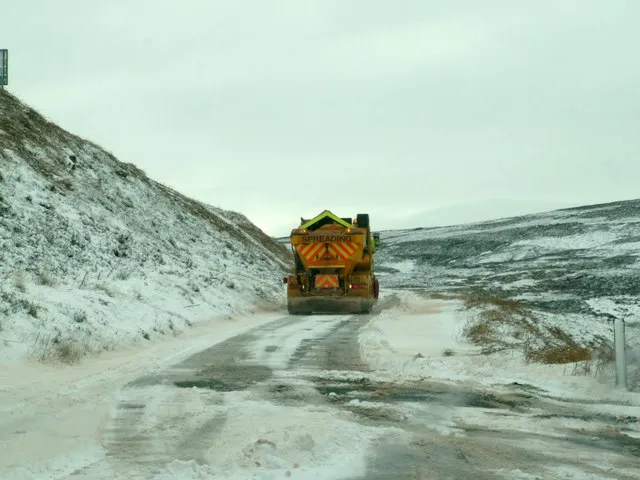
Photo: Grendelkhan, CC BY-SA 4.0, via Wikimedia Commons
For 2026 holidays, plenty of UK drivers will do the same thing: load the car to the roof, strap on a roof box, squeeze in five passengers and head for the coast or the hills. The car feels different straight away. It sits lower, accelerates more slowly and needs more revs to pull away. The clutch feels it too.
A roof box does not just add weight. It adds drag, changes how the car behaves on inclines and can mean more gear changes on a windy motorway. None of that is a reason to cancel the trip. It is a reason to think about loading and driving before the clutch has to cope with a fully loaded hill start in a strange town.
What extra load actually does to a manual clutch
A clutch has to slip a little to get a car moving smoothly. The heavier the car, the more torque is needed and the longer that slip lasts. Add passengers, luggage, a roof box and maybe a trailer, and every pull-away becomes a bigger job.
The clutch’s hardest moment is rarely the motorway cruise. It is the ferry queue, the packed car park, the steep lane to the cottage and the repeated stop-start on a bank holiday route. Those are the moments when a tired clutch starts to show itself.
The roof box factor
A roof box adds weight high up, which affects stability and makes the car more sensitive to crosswinds. It also adds aerodynamic drag. At speed, the engine has to work harder, and on hills or into a headwind you may find yourself in a lower gear more often.
That does not wear the clutch directly in the way a hill start does, but it changes the driving experience. More gear changes, more revs and more load all add up. Check the roof limit in your handbook, keep the box secure and do not exceed the plated roof load.
Loading checklist before you set off
Start with the basics. Check tyre pressures, including the rear tyres, and adjust for a full load if your handbook gives those figures. Keep heavy items low and central where possible, and put lighter items in the roof box. Make sure nothing blocks your view or stops you using the controls.
Check the car’s plated weights and do not exceed them. If you are towing, check the tow bar, trailer tyres and lighting. A mobile clutch inspection before a long trip is also sensible if you have any doubts about the pedal, the bite point or a noise you have been ignoring.
Driving with a full car
On hill starts, use the handbrake rather than holding the car on the clutch. Give the engine a little more revs than usual, but release the clutch smoothly. Do not ride the clutch in queues. If traffic is stopped, put the car in neutral and use the handbrake.
In packed car parks, avoid creeping forward with the clutch half engaged. Wait for a gap, then move properly. On steep lanes, choose a lower gear early and keep steady momentum where it is safe. Leave bigger gaps so you are not constantly stopping and starting.
Warning signs before a long trip
If the revs rise without the car speeding up, especially in a high gear, the clutch may be slipping. A burning smell after a hill start is another red flag. So is juddering when pulling away, a soft or spongy pedal, or a bite point that feels unusually high.
Any of those signs are worth checking before you load up. A mobile clutch fitter can come to your home or workplace and inspect the car without you losing a day at a garage. It is far better to find a problem on your driveway than at a motorway services near Exeter with the family asking when you are setting off again.
If you are towing or heading for the hills
Towing a caravan or trailer on a holiday route puts extra strain on the clutch, especially on hill starts and in slow traffic. Stay within the car’s towing limit, load the trailer sensibly and avoid rushing pull-aways. If the clutch is already weak, a towing holiday is not the time to test it.
Mountainous areas such as the Lake District, Snowdonia or the Scottish Highlands are lovely places to drive, but they ask more of a manual car. Use lower gears on descents, avoid slipping the clutch on steep climbs and take breaks if traffic is heavy.
The pre-holiday clutch check
A pre-holiday inspection is not about inventing work. It is about knowing where you stand. A fitter can check for slipping, pedal feel, hydraulic issues and signs of wear before the car is fully loaded. If it is fine, you can set off with confidence. If it is not, you can plan a replacement around your trip rather than after a breakdown.
Before the roof box goes on, spend ten minutes thinking about load, tyre pressures, hill starts and warning signs. Your clutch has a long journey ahead too.