Shuffle, Reverse, Repeat: The Car Park Habits That Quietly Wear Out Your Clutch
Photo: Aart Rietveld, CC BY-SA 4.0, via Wikimedia Commons
Ask most drivers what kills a clutch and you'll hear the same answer: motorway traffic, heavy loads, maybe a caravan. Fair enough. But park up outside a school at ten to nine, or follow the spiral ramp of a multi-storey on a Saturday, and you'll see the real culprit at work. Not speed. Not distance. Just a lot of very slow, very deliberate slipping.
Parking is the quiet part of clutch wear. Nobody notices it because nothing dramatic happens — no burning smell on the motorway, no judder at 70mph. It's just a hundred small moments a week where the clutch is asked to do the hardest job it has: transmit drive while barely moving.
Walking pace is the hardest work your clutch ever does
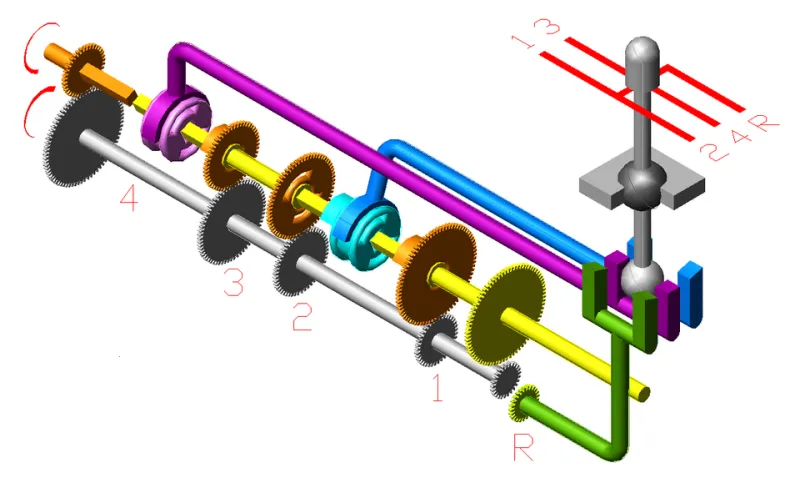
At a steady cruise, your clutch is clamped shut. The friction plate and flywheel are locked together, spinning as one, and essentially nothing is wearing. At two miles an hour, with the pedal half down, the opposite is true. The plate is being dragged against the flywheel, slipping by design, turning engine speed into heat and slow movement. Every metre you creep is a metre of controlled friction.
That's not a fault. It's how a manual car works. But it explains why a car that spends its life doing the school run, the supermarket shuffle and the reverse-into-a-tight-bay routine can wear a clutch out long before a high-mileage motorway car does. Miles are a poor measure of clutch life. Slipping time is a much better one.
Reverse is a short, sharp gear for a fiddly job
Reverse tends to be a low, punchy ratio — often shorter than first — which means more torque multiplication and less tolerance for clumsy feet. You don't get the same smooth, forgiving pull-away you get in first. You get a gear that wants to either lurch or stall, so you end up feathering the pedal for longer than you'd like, modulating the bite point in tiny increments.
Add the usual conditions and it gets worse. You're often reversing cold, with the engine still warming through, craning over your shoulder, watching a mirror and a sensor screen at once. Your left foot isn't at its most precise. And if the bay is tight — a Victorian terrace street, a cramped station car park, a sister's driveway with a wheelie bin in the way — you'll shunt. Forward. Back. Forward. Back. Every shunt is another slip cycle, and they add up fast.
The multi-storey is basically a clutch test rig
Think about the last time you parked in a town centre multi-storey. The barrier at the entrance, where you inch forward and stop, then inch forward again. The ramp, which you climb at a crawl because the car in front is doing the same. The tight turn at each level, taken at walking pace with the clutch half in. The queue for a space while someone does a twelve-point turn. Then the reverse into the bay itself.
That's not one clutch event. It's twenty or thirty, all within a few minutes, all at the exact speed where the clutch is slipping hardest. Do it twice a week for three years and the friction lining has done far more work than the odometer suggests.
The warning signs that parking wear is becoming a problem
A clutch doesn't fail without notice. It grumbles first, usually in the situations where it's working hardest:
- A bite point that's crept higher up the pedal travel. If you used to find it halfway and now it's near the top, the lining is thinning.
- Judder when reversing or pulling away slowly. A shuddery, graunchy feel at walking pace often points to hot spots or contamination on the friction surfaces.
- A hot, sharp smell after parking. A faint whiff after a hard reverse up a slope is one thing. A regular smell after a normal bay manoeuvre is not.
- Revs flaring without matching movement. If the engine note rises but the car doesn't, the clutch is slipping when it shouldn't.
- Rumbling or squealing when the pedal is pressed. That's more likely the release bearing, but it's part of the same job and worth checking.
None of these mean the car is about to strand you on the hard shoulder. They do mean the clutch is telling you something, and ignoring it usually turns a clutch bill into a clutch-and-flywheel bill.
Small technique changes that make a real difference
You don't need to become a driving instructor to be kinder to your clutch. A few habits do most of the work:
Plan the manoeuvre before you select reverse. Mirrors, sensors, a quick look over the shoulder — work out where the car needs to go before your foot starts modulating. Fewer corrections means less slipping. Use the handbrake on slopes. Holding a car on a hill with the clutch at the bite point is the single most expensive habit in this article. Handbrake on, bite point briefly, handbrake off. Done. Leave a gap at barriers and in queues. Creeping forward a metre at a time in a car park queue is pointless. Wait, then move once. Don't clutch-crawl for long distances. Rolling through a car park at walking pace with the pedal half down is not smooth driving, it's just wear. Clutch fully down or fully up wherever the speed allows. Get it right first time where you can. A clean single reverse into a bay uses a fraction of the slip of three corrective shunts. If the space is genuinely tight, take the extra seconds to line up properly.
When to stop diagnosing and call a fitter
If the bite point is high, the car judders in reverse, or you're getting a smell after ordinary parking, get it looked at. A worn clutch doesn't repair itself, and a slipping clutch can make the drive to a garage genuinely unpleasant — or unsafe if it lets go on a hill.
That's where mobile fitting earns its keep. A technician comes to your home or workplace, inspects the car where it stands, and fits the clutch on your drive or in your work car park. No nurse-mauling a slipping car across town, no day without the vehicle, and a clear quote before anything is ordered. Williams Mobile Clutch covers this kind of work across the UK, and it's a sensible route for anyone whose car is still driveable but clearly not happy.
Parking will always be fiddly in Britain. Tight bays, narrow streets and multi-storey ramps are part of the deal. But the clutch wear they cause isn't inevitable — it's the sum of a hundred small habits, and most of them are easy to change.